
Bluffdale Foundation Pros
Piering and Underpinning in Draper, UT
Push pier and helical pier underpinning in Draper, UT for settling foundations. Free estimates, written repair plans.
- 15+ Years local experience
- 500+ Projects completed
- Licensed & Insured
Serving Draper and nearby communities.
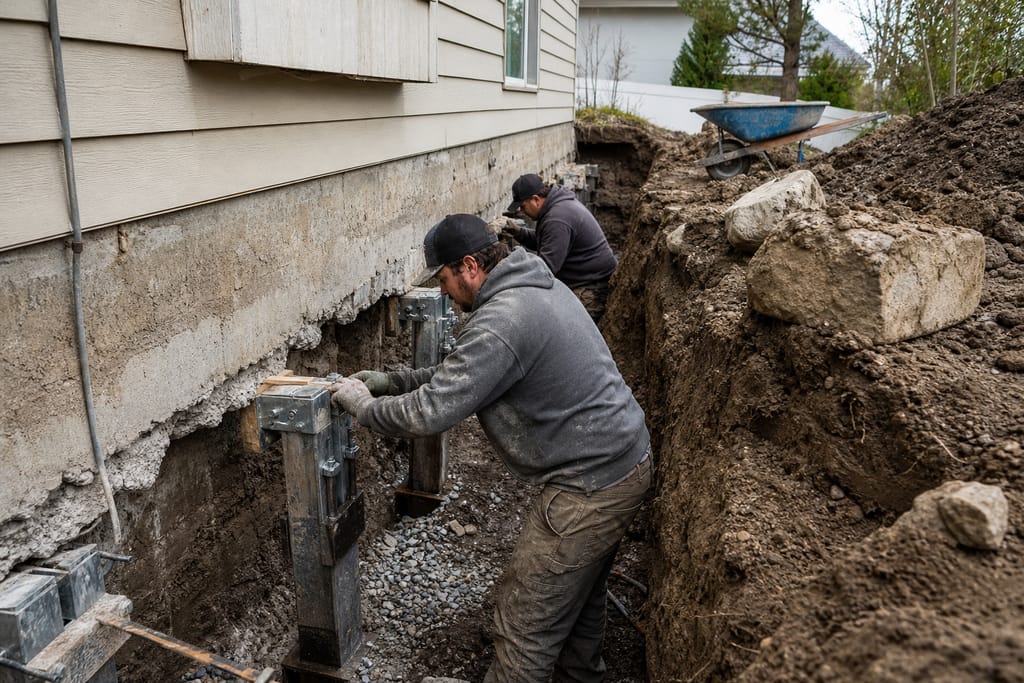
Not every foundation problem can be fixed with a tube of epoxy. When a corner of the house has actually sunk, or cracks keep widening season after season, the structure needs something under it carrying real load. That's underpinning.
Bluffdale Foundation Pros sees this most often on Draper's bench lots, where grading shifts and soil composition can vary across a single property. Piering gives the foundation a stable point to rest on instead of chasing the symptoms above it.
What's included
What's Included
- Load assessment — to determine how many piers and what depth the job needs
- Soil evaluation — at each pier location, since bench-area soil isn't uniform
- Pier type selection — push piers for heavier loads, helical for lighter structures
- Load transfer and leveling — , raising the foundation back toward its original position
- Optional — post-install monitoring visit to confirm stability holds
- Customer prep — clear access around the foundation perimeter where piers go in
Want a clearer scope?
Get a Free EstimatePiering and Underpinning
Push Piers vs Helical Piers
Push piers drive down to bedrock or dense, load-bearing soil and work well for heavier structures like full basements. Helical piers screw in and rely on torque resistance, which fits lighter additions or areas with mixed, sandy soil. Which one fits your house usually comes down to the load and what the soil looks like a few feet down, something we check during the site visit rather than guessing from the surface.
Questions about this?
Get a Free EstimateHow it works
How Our Piering and Underpinning Process Works
 Step 1
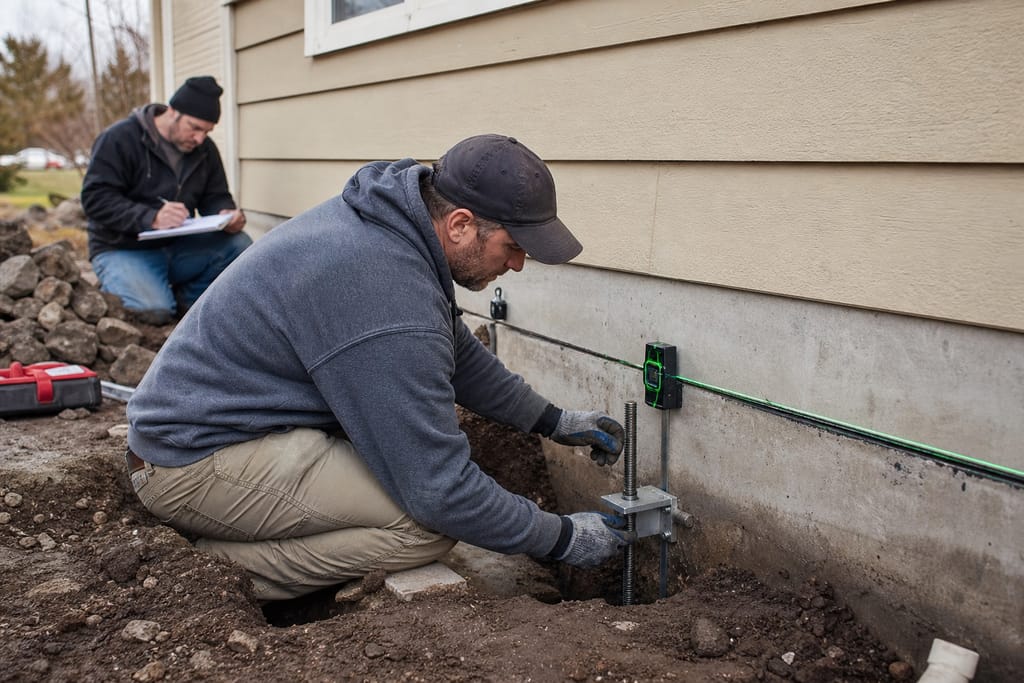
Load Assessment
The structure's weight distribution is analyzed to determine pier placement.
 Step 2
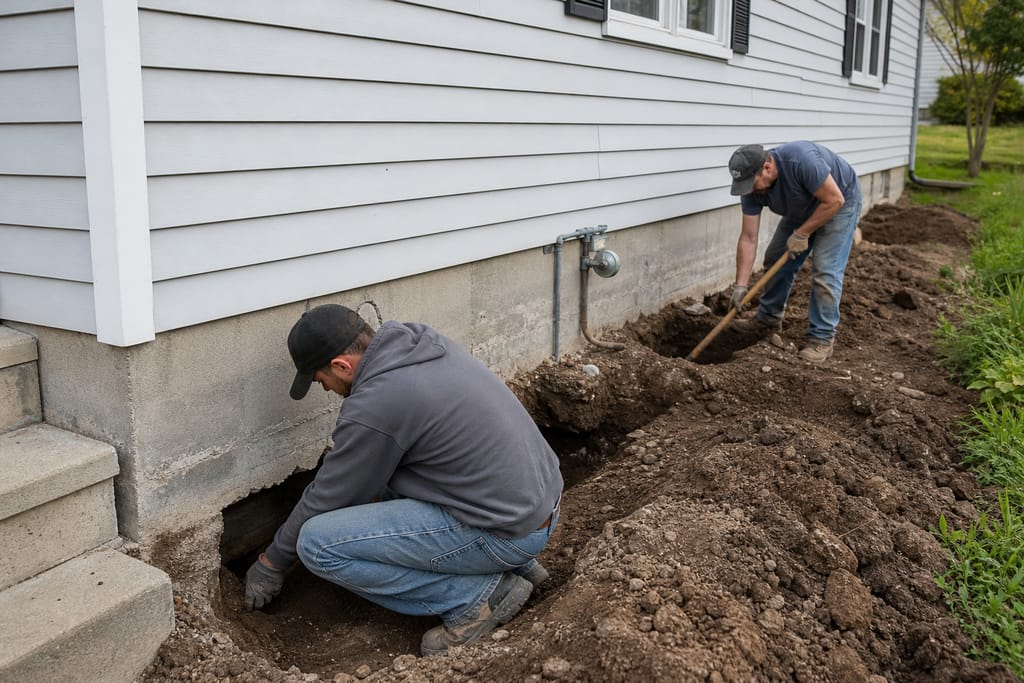
Access Excavation
Small excavation points are created along the foundation perimeter.
 Step 3
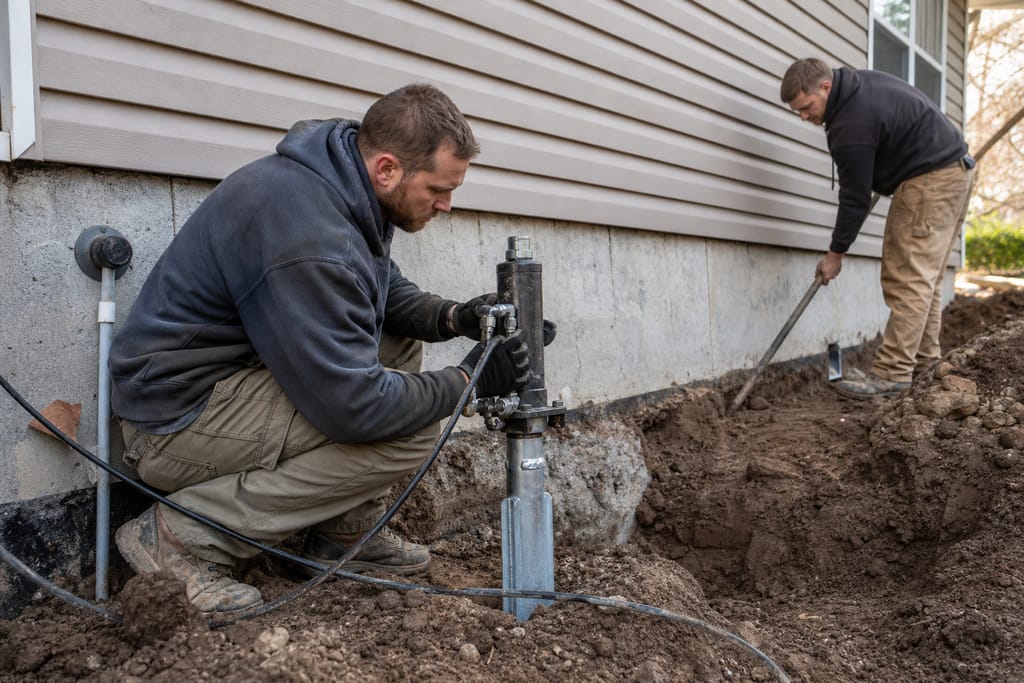
Pier Driving
Piers are driven or screwed into the ground until reaching stable strata.
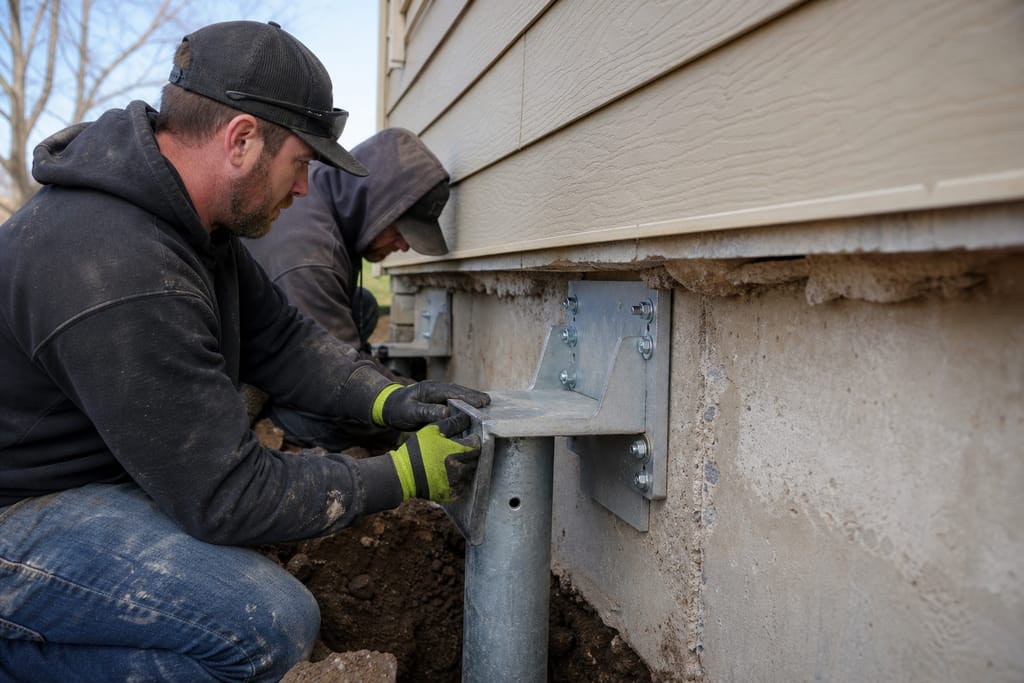 Step 4
Load Transfer
Brackets connect the piers to the foundation to redistribute structural weight.
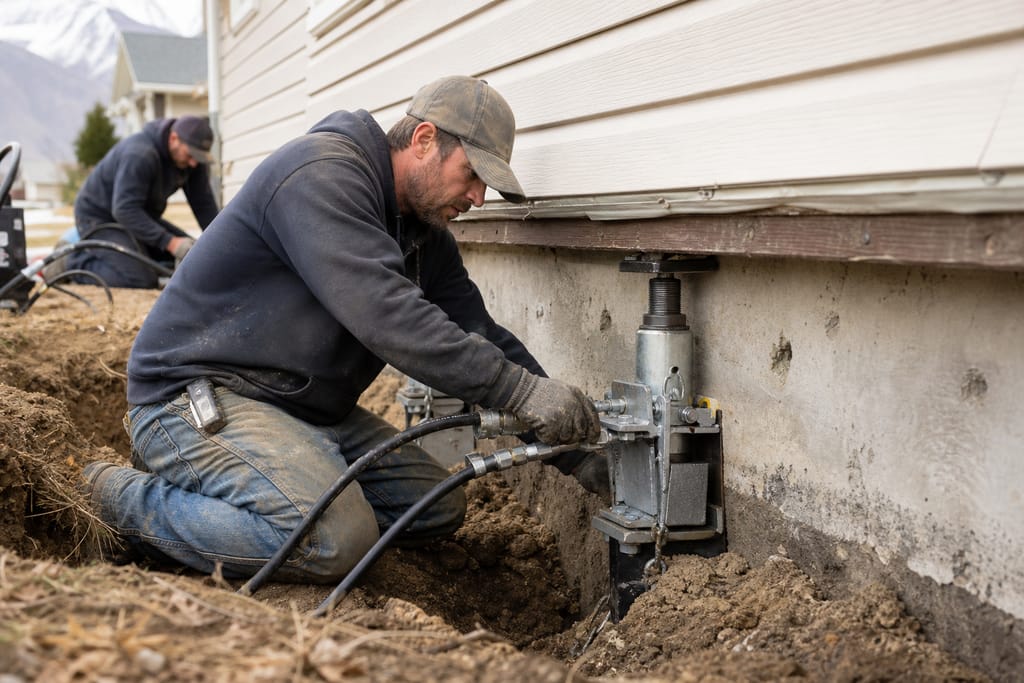 Step 5
Leveling Adjustment
Hydraulic equipment carefully raises the foundation to its intended position.
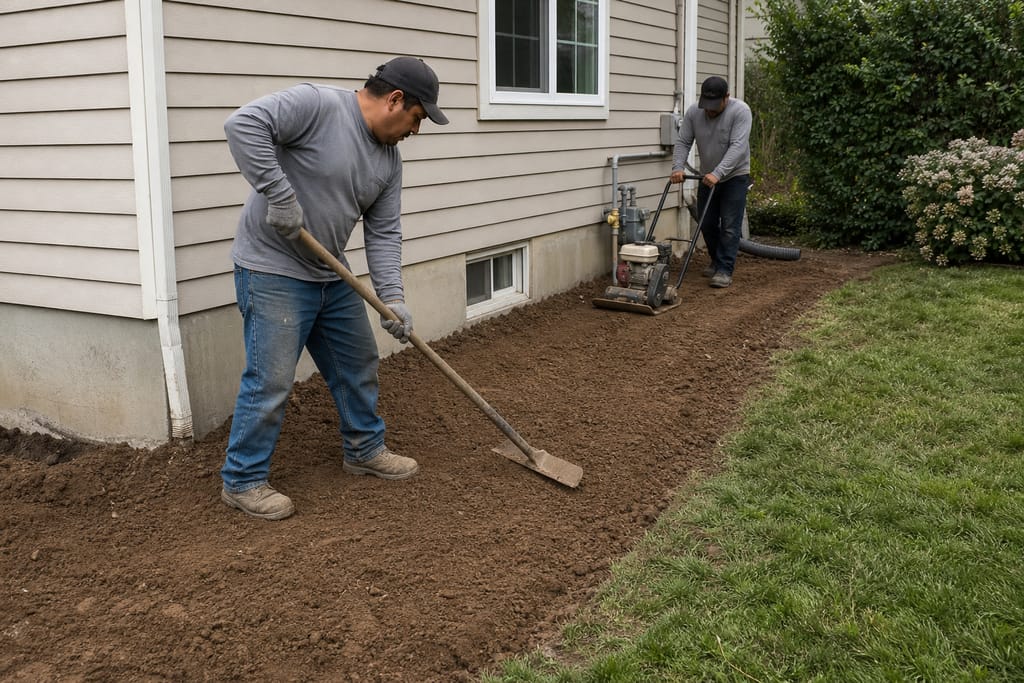 Step 6
Site Restoration
Excavated areas are backfilled and compacted to match the original grade.
Materials
Materials and Methods for Piering and Underpinning
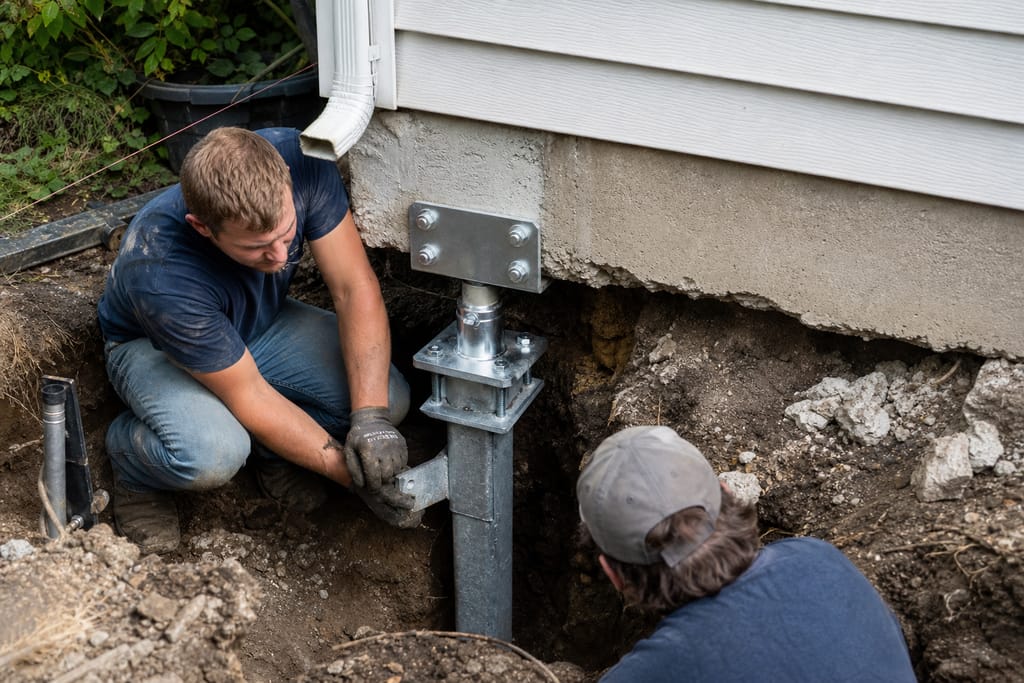
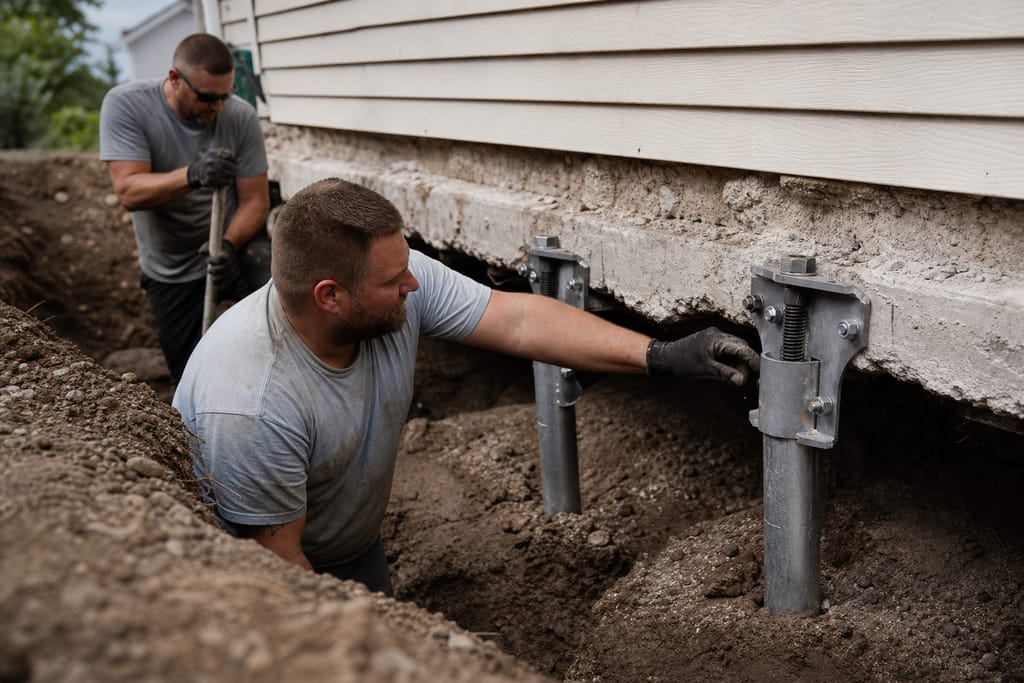
Steel Push Piers
Deliver deep, reliable support for heavier structural loads common in full-basement Draper homes.
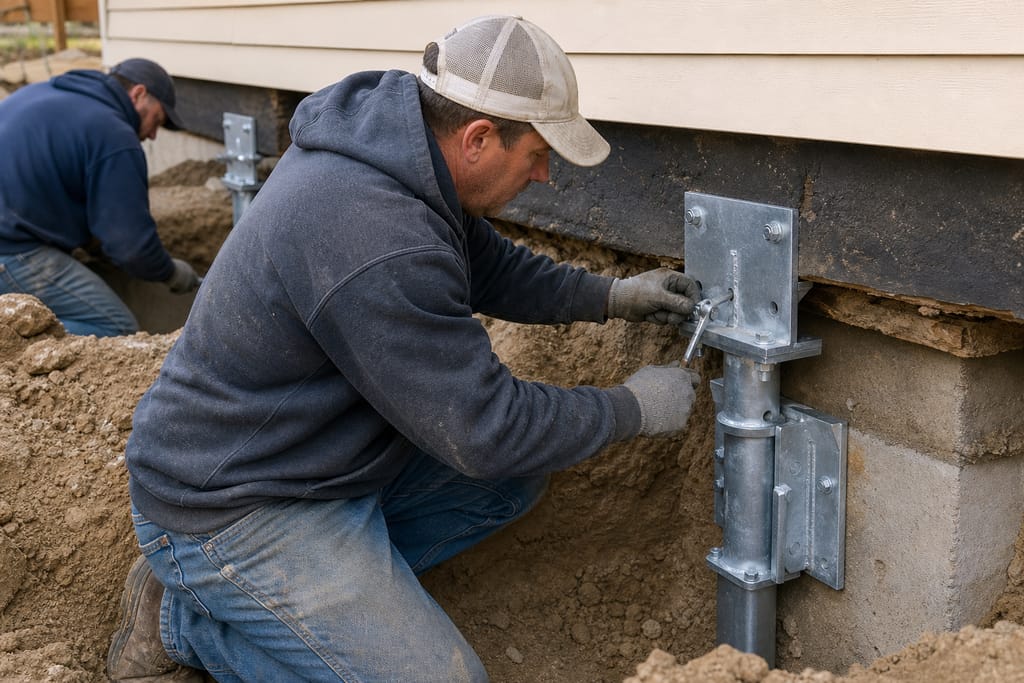
Helical Piers
Provide torque-driven support suitable for the mixed soil conditions along the bench.
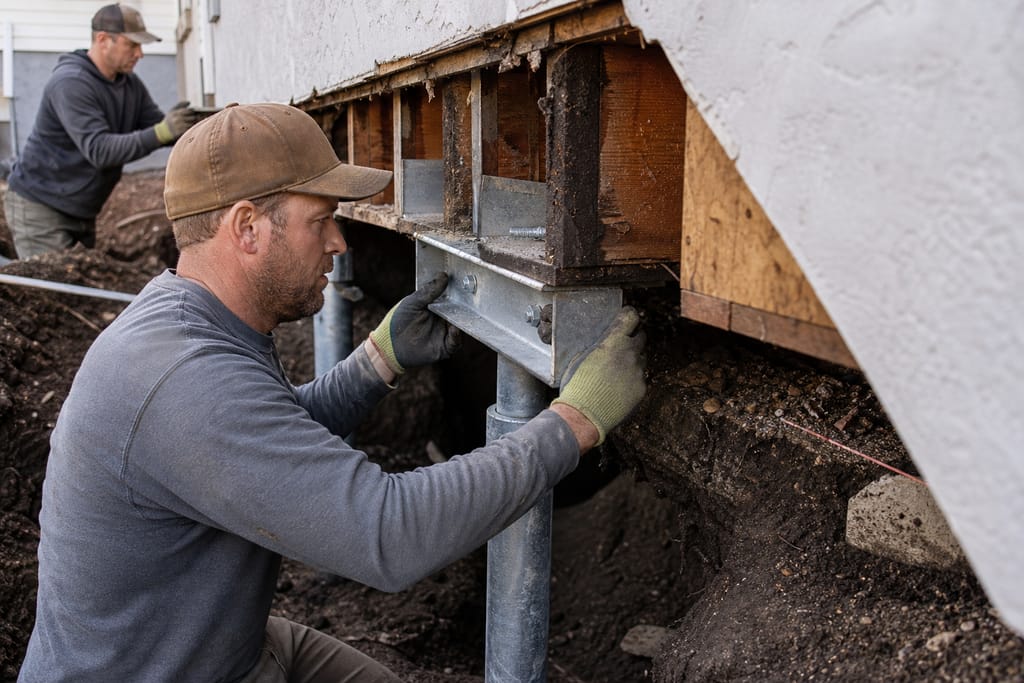
Underpinning Brackets
Connect piers securely to existing foundation footings for consistent load transfer.
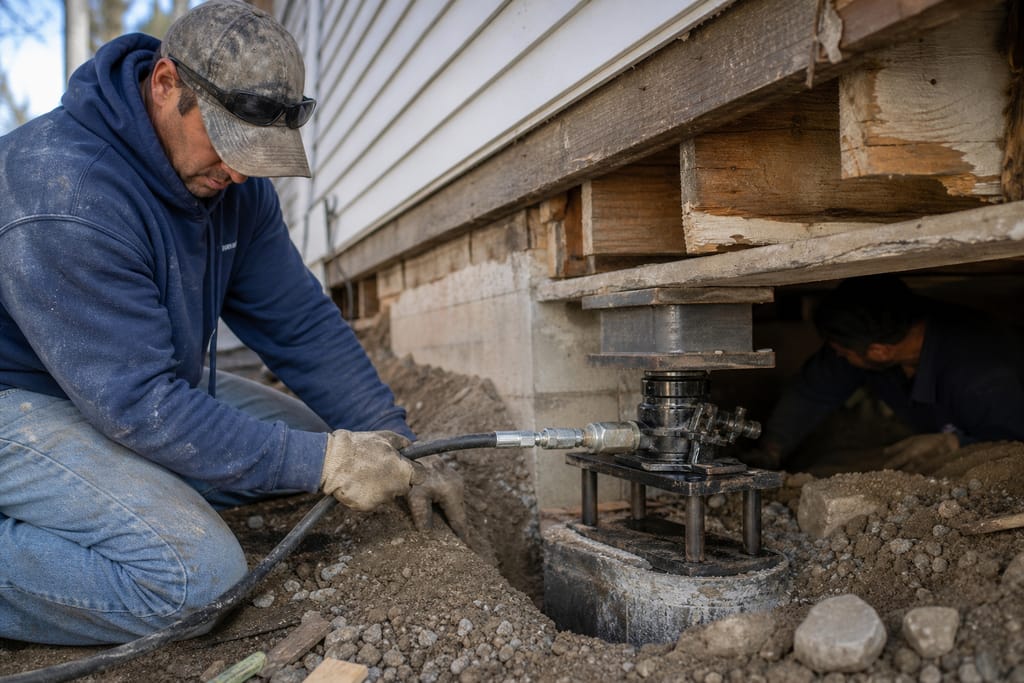
Hydraulic Lift Systems
Used to achieve controlled and precise foundation elevation changes without overcorrecting.
Galvanized Coatings
Protect steel components from corrosion, worth it given seasonal moisture swings.
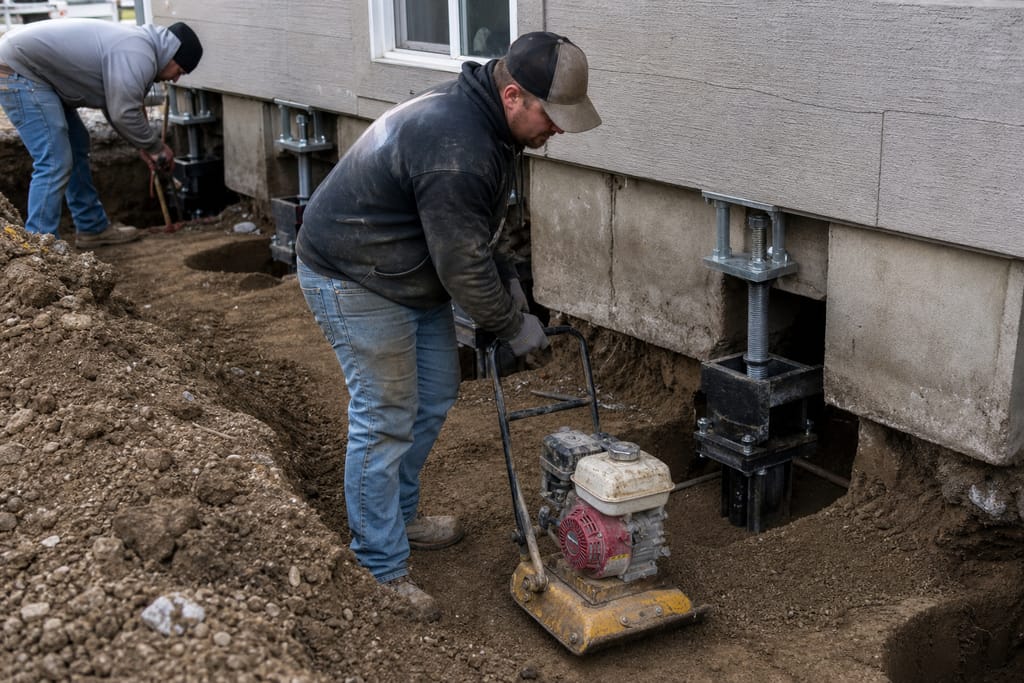
Compacted Fill Material
Used to stabilize soil around newly installed piers so settling doesn't restart nearby.
Questions on materials?
Get a Free EstimateTimeline
How Long Does a Piering and Underpinning Project Take?
Timing depends mostly on how many piers the foundation needs.
- 01
Consult and site assessment
same day - 02
Written estimate
1–2 days - 03
Pier installation (per side)
1–3 days - 04
Load transfer and leveling
1 day - 05
Final grading and cleanup
same day
Need a schedule that fits?
Get a Free EstimateFAQs
Piering and Underpinning FAQs
What's the difference between polyjacking and mudjacking, and is mudjacking still used?
Polyjacking uses polyurethane foam that's lighter and cures fast; mudjacking uses a heavier cement slurry that's largely fallen out of favor here because it's slower and adds more weight to already-soft soil. We use polyjacking, not mudjacking.
How long does underpinning or piering take before I can use my basement again?
Most residential jobs run a few days to about a week depending on pier count. The basement itself usually stays usable during the work since piers are installed from the exterior perimeter.
Do I need a permit to install push piers or helical piers in Draper?
Typically. Underpinning is structural work and usually needs plan review through the county building office before installation.
Is DIY piering possible?
No. This is load-bearing structural work. Getting pier depth or spacing wrong risks uneven lifting or further foundation damage, and it's not something a homeowner can safely do without engineering input.
What drives the cost of a piering job?
Mainly the number of piers needed, how deep they have to go to reach stable soil, and how accessible the foundation perimeter is.
Next step
Get a Piering and Underpinning Estimate in Draper
Call Bluffdale Foundation Pros at +1 (385) 336-5716 for a free estimate and a written pier count. Contact us or check our Foundation Repair page if you're not sure piering is the right fit yet.
More services
Other Foundation Repair services
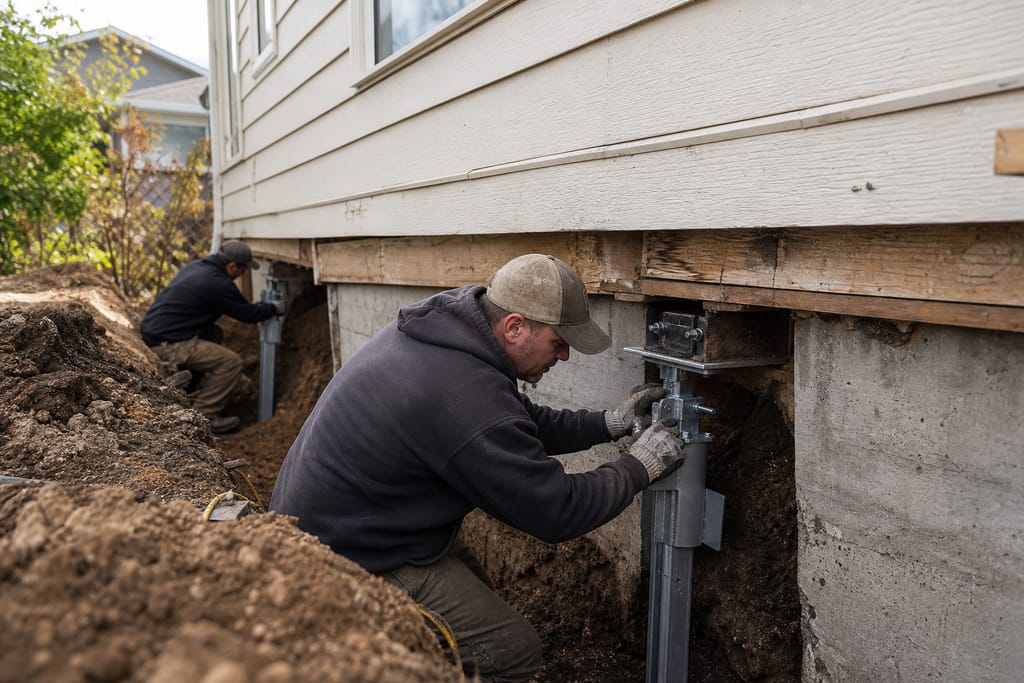
Foundation Repair
Foundation repair in Draper, UT: crack injection, piering, and wall stabilization for settling homes. Free estimates.
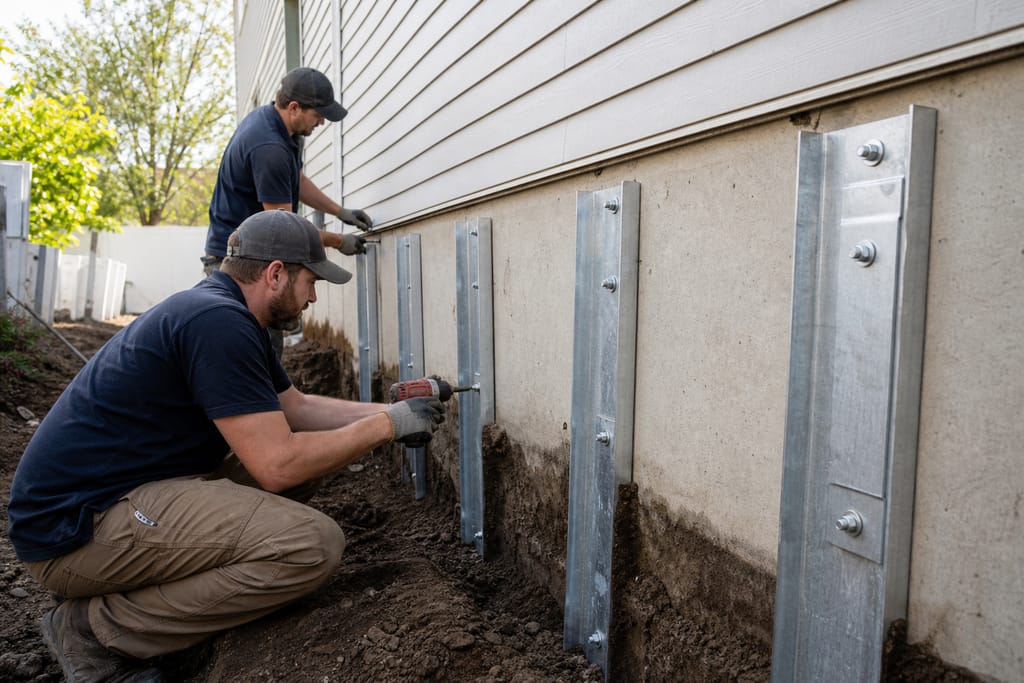
Wall Stabilization
Basement wall stabilization in Draper, UT using steel anchors and carbon fiber straps. Free estimates for bowing walls.
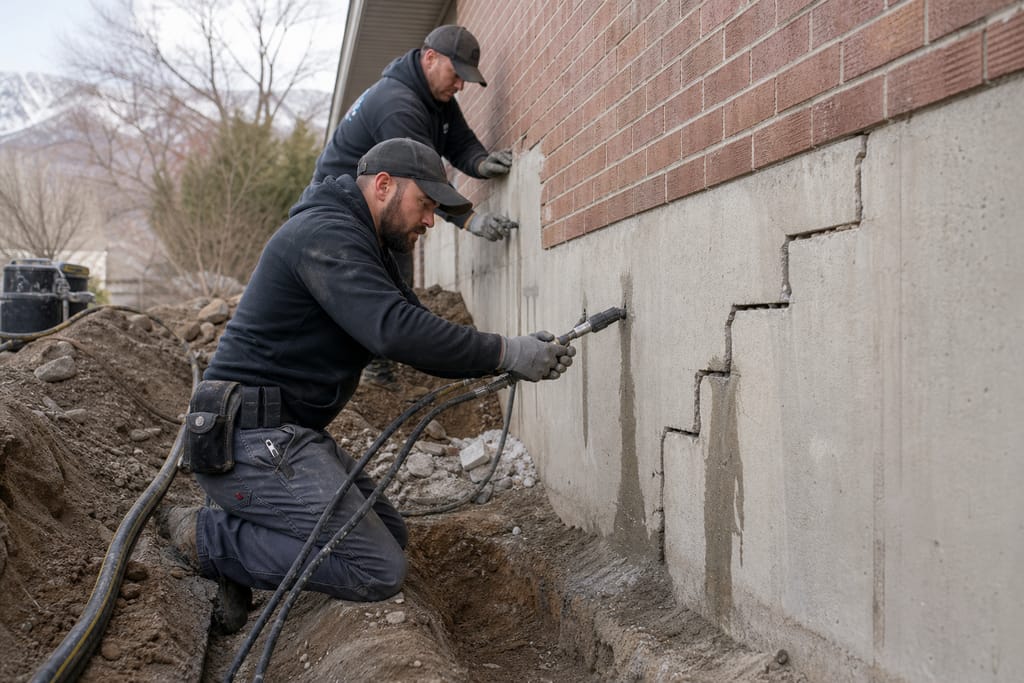
Foundation Crack Repair
Foundation crack repair in Draper, UT: epoxy and polyurethane injection for basement cracks, with free on-site estimates.
Ask about Piering and Underpinning
Tell us about the project and how to reach you.