Bluffdale Foundation Pros
Concrete Lifting in Draper, UT
Concrete lifting in Draper, UT using polyurethane foam injection for sunken driveways, patios, and sidewalks. Free estimates.
- 15+ Years local experience
- 500+ Projects completed
- Licensed & Insured
Serving Draper and nearby communities.
Bench-grade soil settling doesn't only affect foundations. It shows up under driveways, patios, and sidewalks too, usually as a sunken slab or a tripping edge where one panel sits lower than its neighbor. That's a separate issue from foundation wall movement, and it has its own fix.
Bluffdale Foundation Pros uses polyjacking, not mudjacking, for this work. Polyurethane foam is lighter, cures within hours instead of days, and doesn't add the extra weight to already-soft soil that older mudjacking methods did.
What's included
What's Included
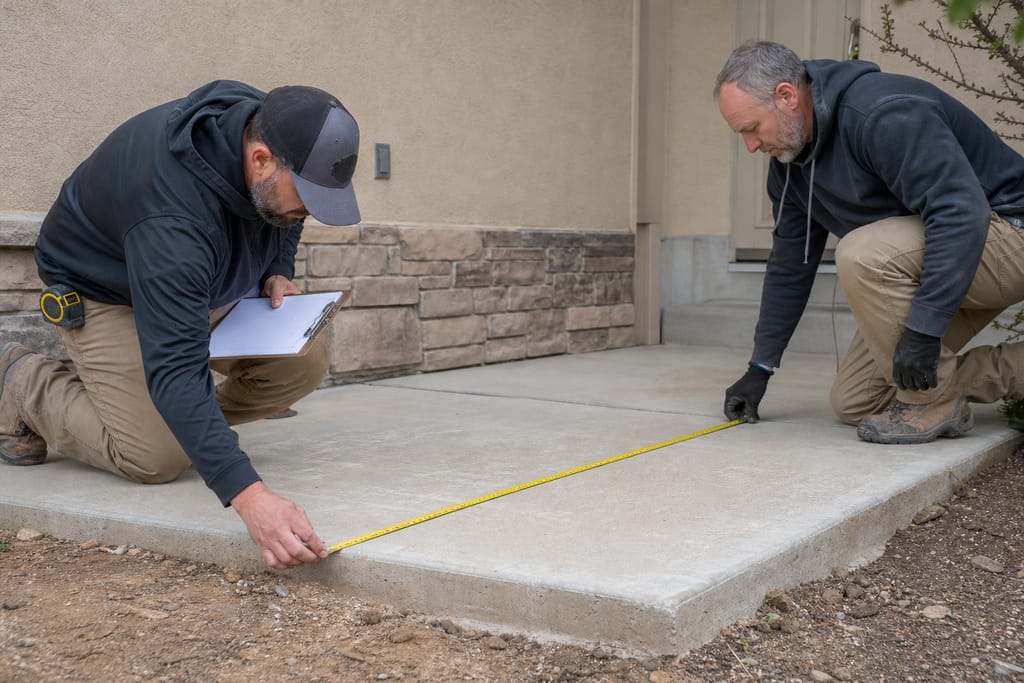
- Slab assessment — , measuring how far sunken sections have dropped
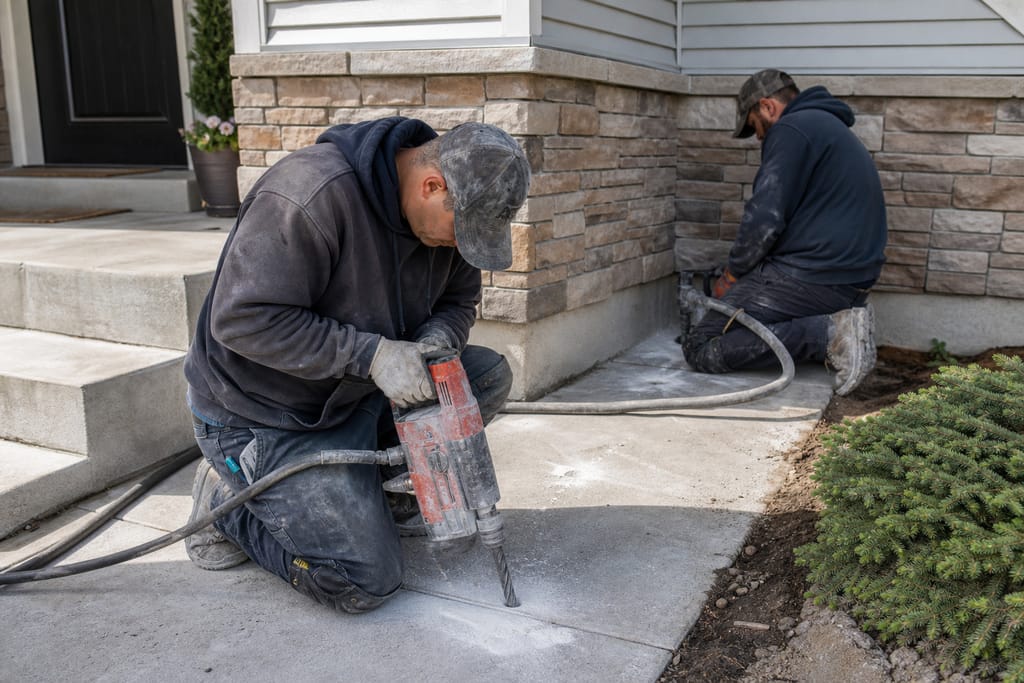
- Dime-sized drill holes — at strategic points on the slab
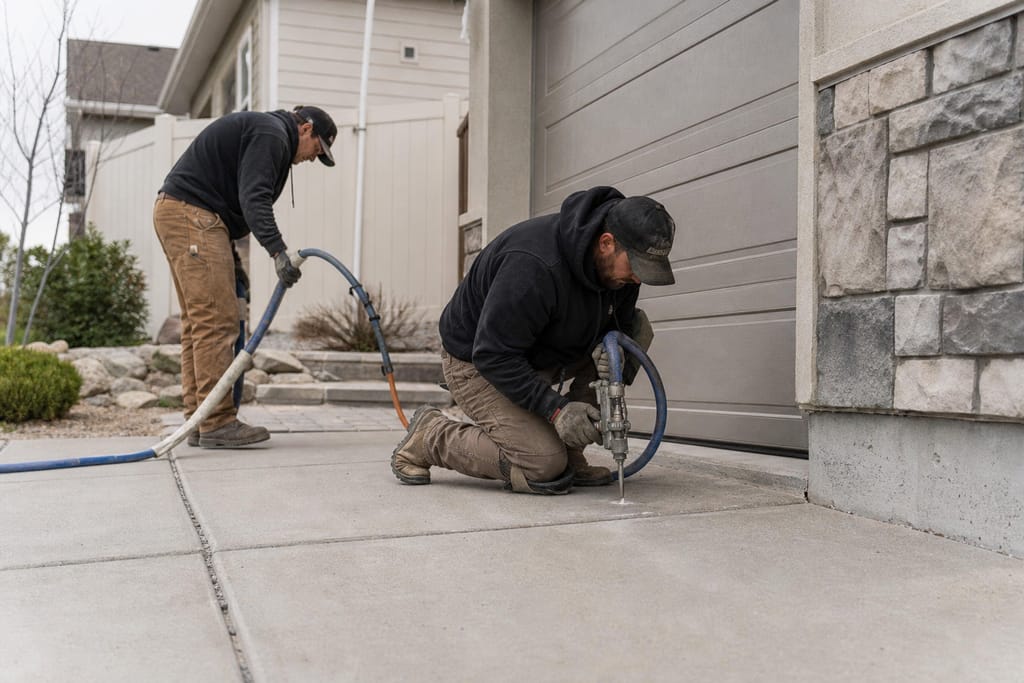
- Polyurethane foam injection — beneath the slab to lift it level
- Hole patching — to blend with the existing surface
- Optional — joint sealing on panels adjacent to the lifted section
- Customer prep — move vehicles or patio furniture off the work area before the crew arrives
Want a clearer scope?
Get a Free EstimateHow it works
How Our Concrete Lifting Process Works
 Step 1
Surface Assessment
Uneven or sunken concrete areas are identified and measured.
 Step 2
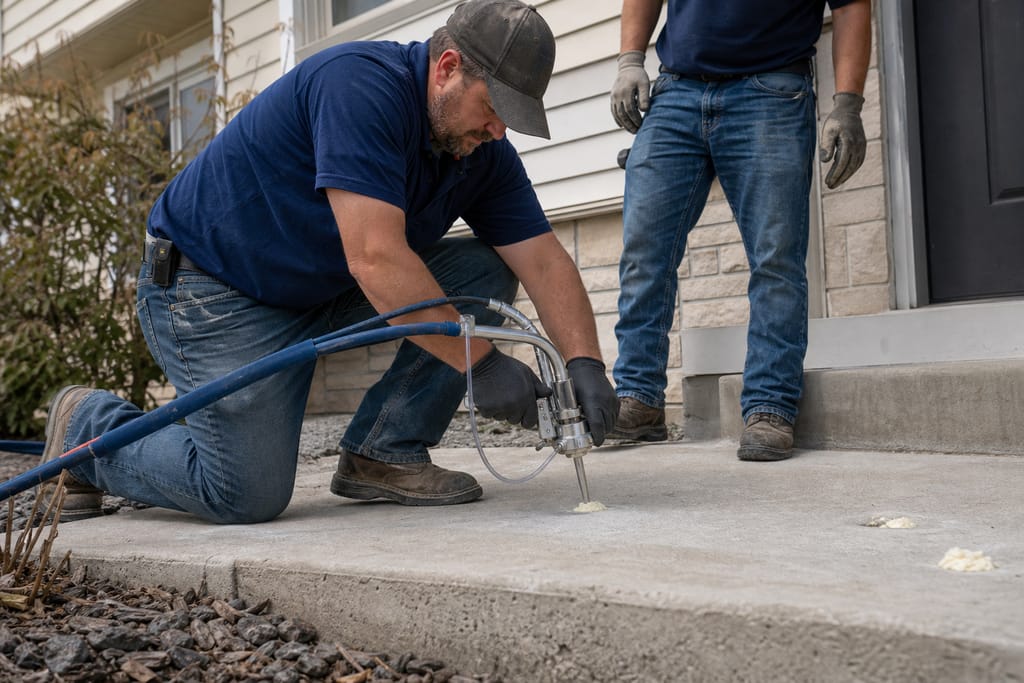
Drilling Access Holes
Small holes are drilled into the concrete to allow material injection.
 Step 3
Material Injection
Expanding foam is injected beneath the slab to raise it evenly.
 Step 4
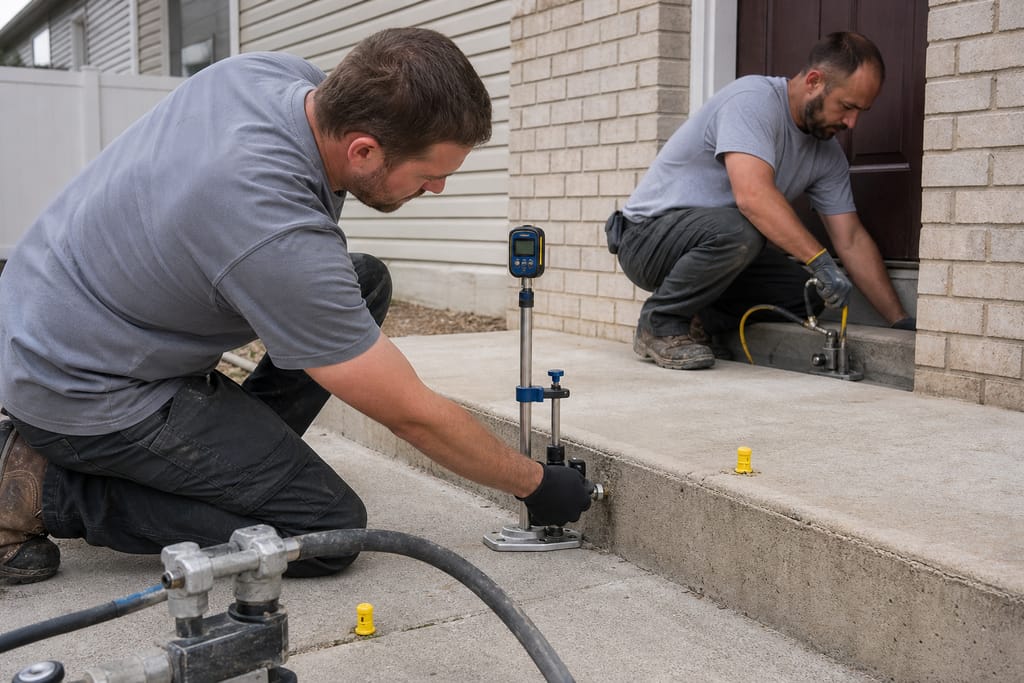
Elevation Monitoring
Lift progress is measured to achieve the desired level.
 Step 5
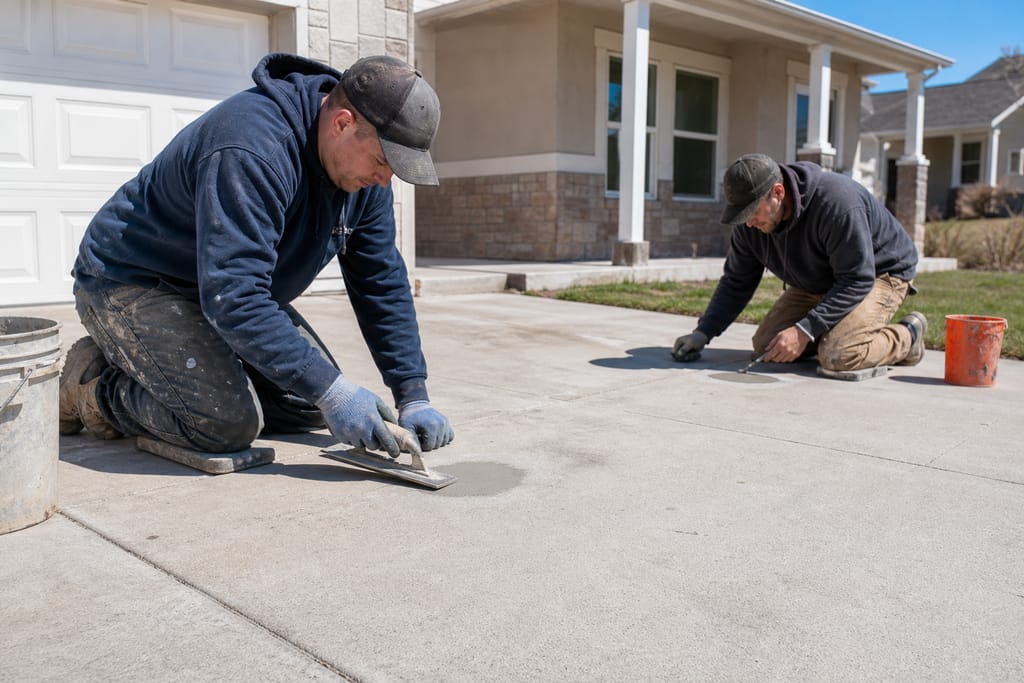
Hole Patching
Access holes are filled and finished to match the surrounding surface.
 Step 6
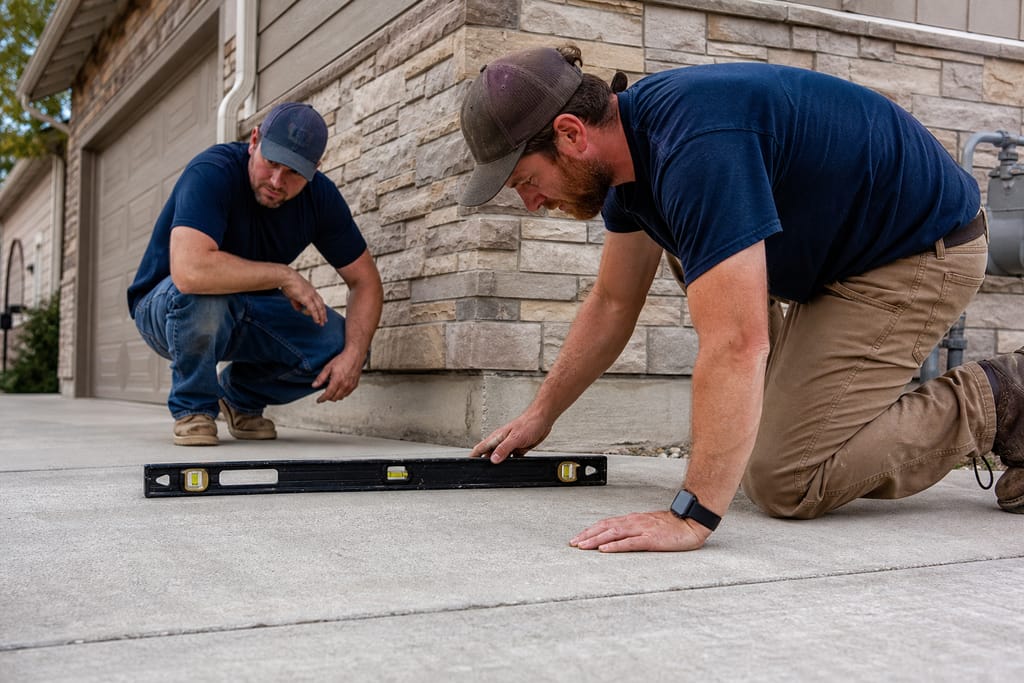
Final Inspection
The lifted area is reviewed for levelness and stability.
Materials
Materials and Methods for Concrete Lifting
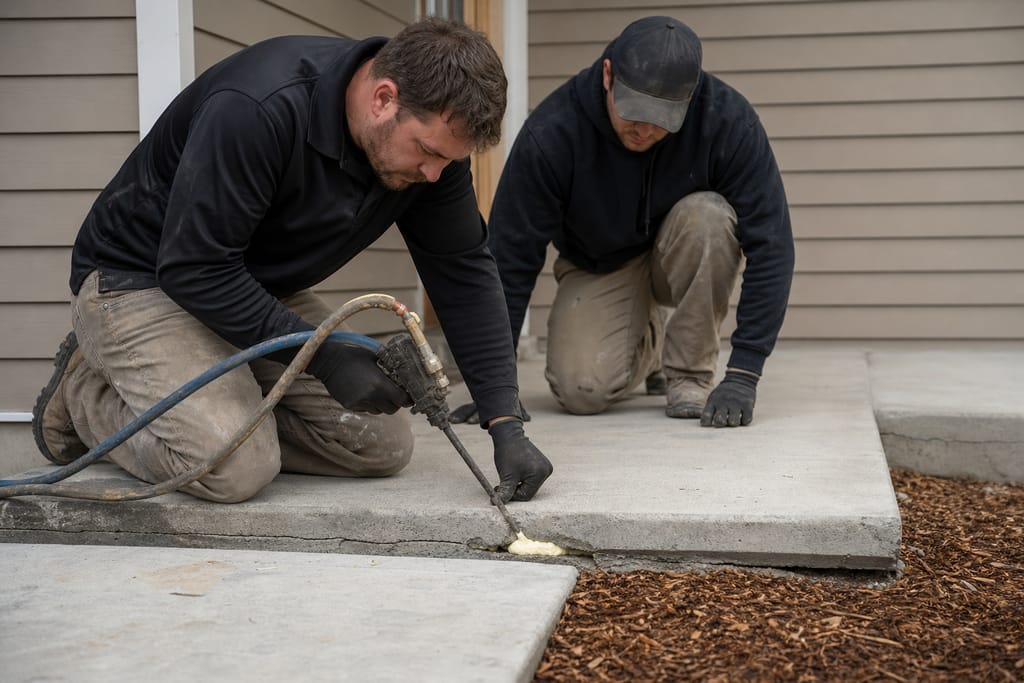
Polyurethane Foam
Expands beneath slabs to lift and stabilize concrete surfaces, built for Draper's shifting bench soil.
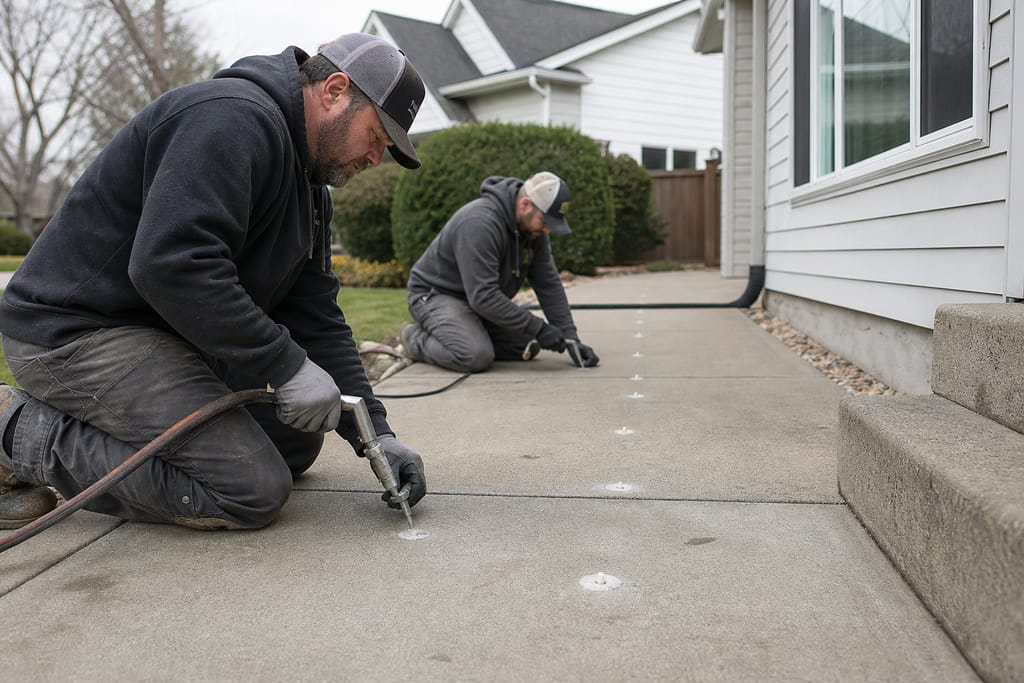
Injection Ports
Allow controlled placement of lifting material under the slab for an even lift.
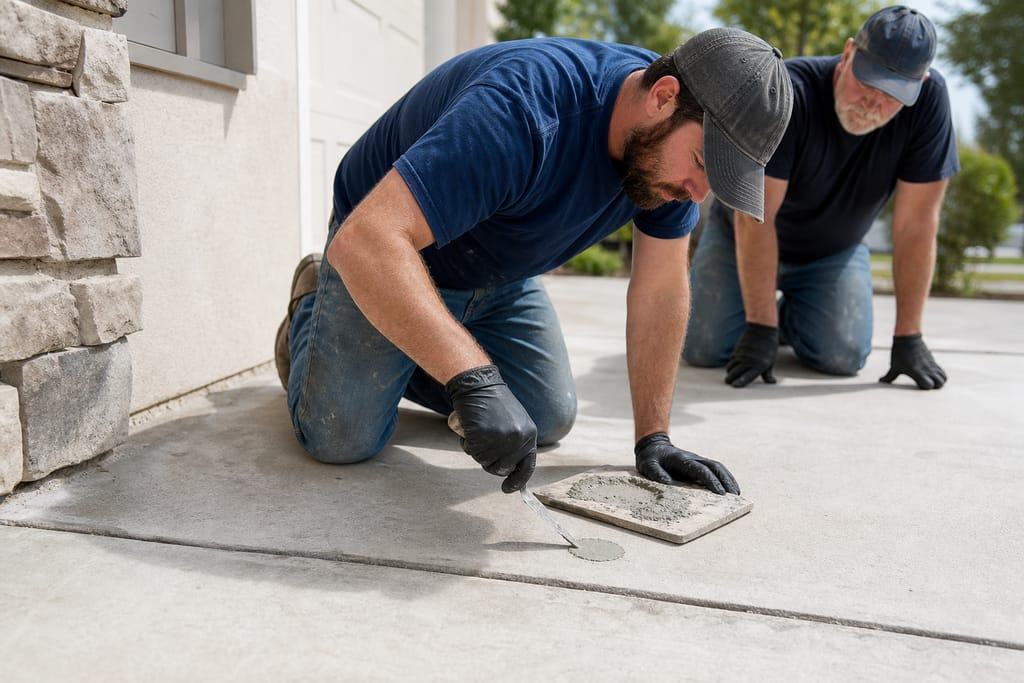
Patch Compound
Fills drilled access holes for a smooth finish on driveways and walkways.
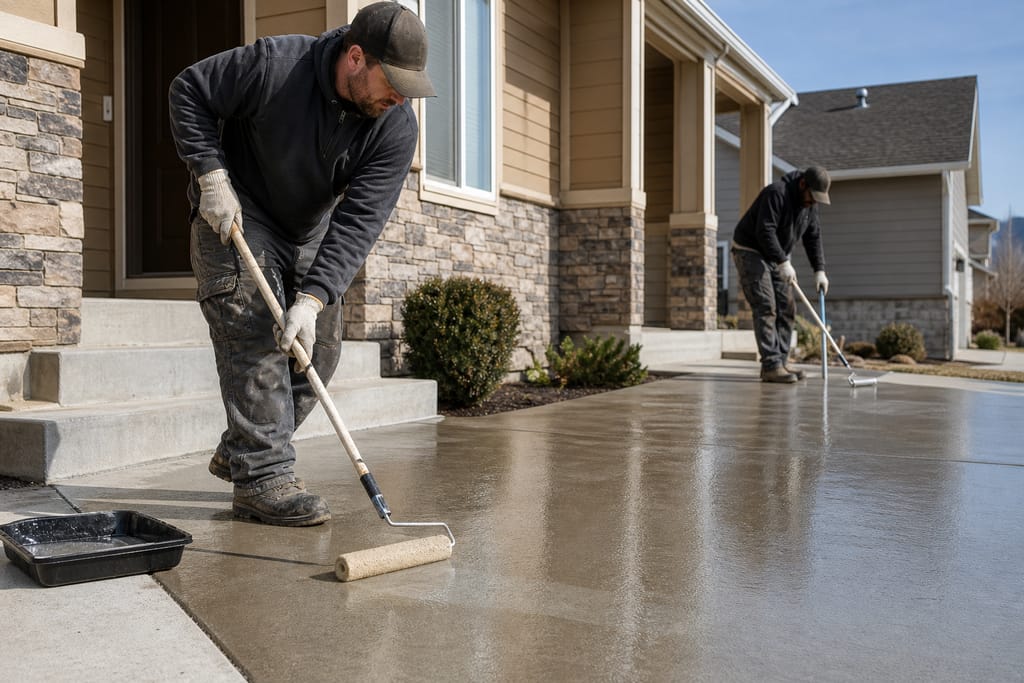
Surface Sealant
Protects the repaired area from moisture and staining through winter months.
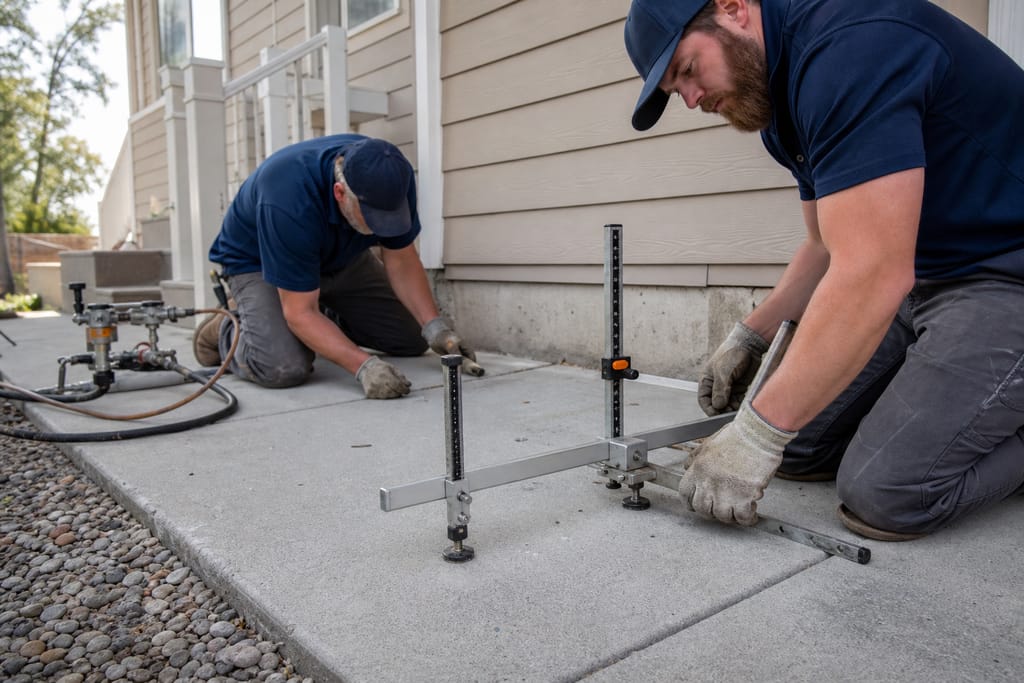
Leveling Gauge
Used to measure and confirm slab elevation during lifting for an accurate result.
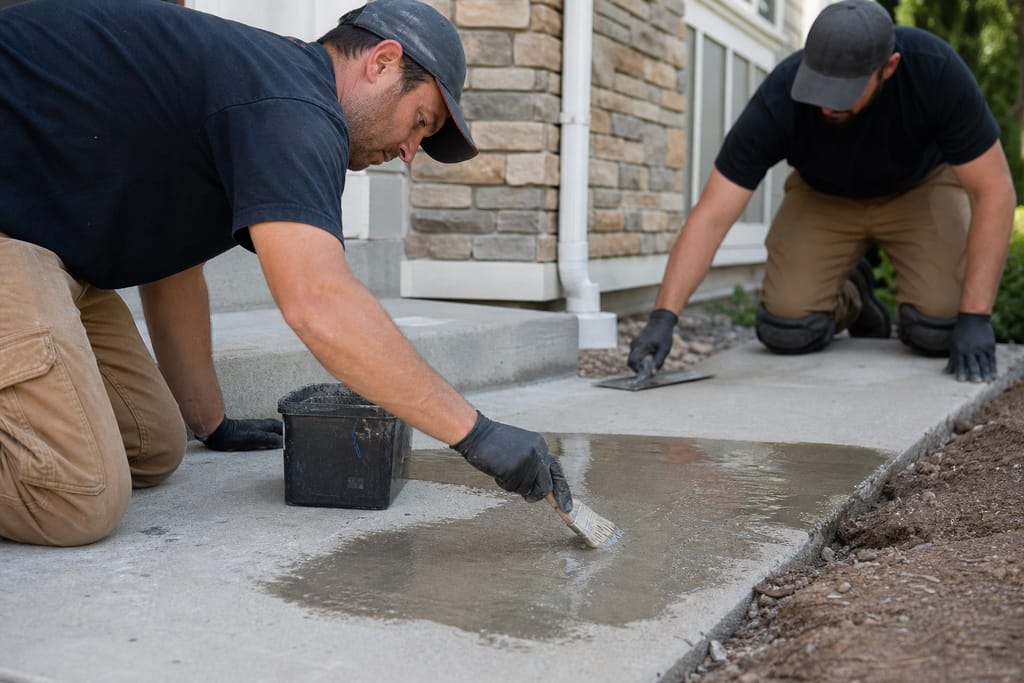
Bonding Agent
Improves adhesion between new patch material and existing concrete over time.
Questions on materials?
Get a Free EstimateWhen to call
When to Call for Concrete Lifting
If you're seeing any of these, call Bluffdale Foundation Pros at +1 (385) 336-5716 for a free assessment.
- A sunken driveway edge near the garage apron
- A sidewalk panel that's become a tripping hazard
- A patio corner where water pools instead of draining away
- Cracked panel edges developing at an uneven seam
Seeing warning signs?
Get a Free EstimateFAQs
Concrete Lifting FAQs
What's the difference between polyjacking and mudjacking, and is mudjacking still used?
Polyjacking injects lightweight polyurethane foam that expands and cures within hours. Mudjacking uses a heavier cement-based slurry that takes longer to cure and adds more weight to the soil underneath. Mudjacking has mostly fallen out of favor here because of that added load and slower timeline.
Is DIY concrete lifting possible?
Not really. Foam injection requires specific equipment and controlled pressure to lift a slab evenly without cracking it further. A DIY kit can't replicate that level of control.
How much does concrete lifting cost compared to slab replacement?
Polyjacking generally costs a fraction of full slab tear-out and replacement, since there's no demolition or new concrete pour involved.
How long before I can use the surface after lifting?
Most polyjacked surfaces are walkable within an hour and drivable (for driveways) within a few hours, much faster than a poured replacement would allow.
Do I need a permit for concrete lifting?
Most polyjacking on an existing slab doesn't need one. A full slab replacement usually does.
Concrete Lifting
Explore by Surface
Driveway sinking near the garage? See Driveway Lifting. Patio holding water after storms? See Patio Lifting. Tripping hazard on your walkway? See Sidewalk Lifting.
Questions about this?
Get a Free EstimateBefore & after
Before and After
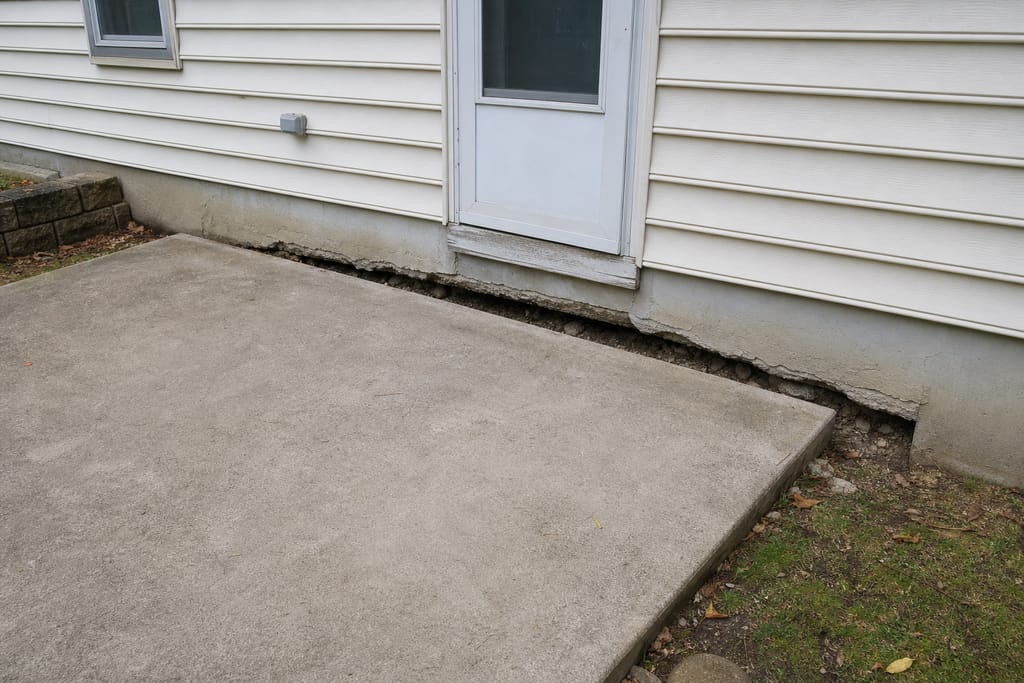
Before 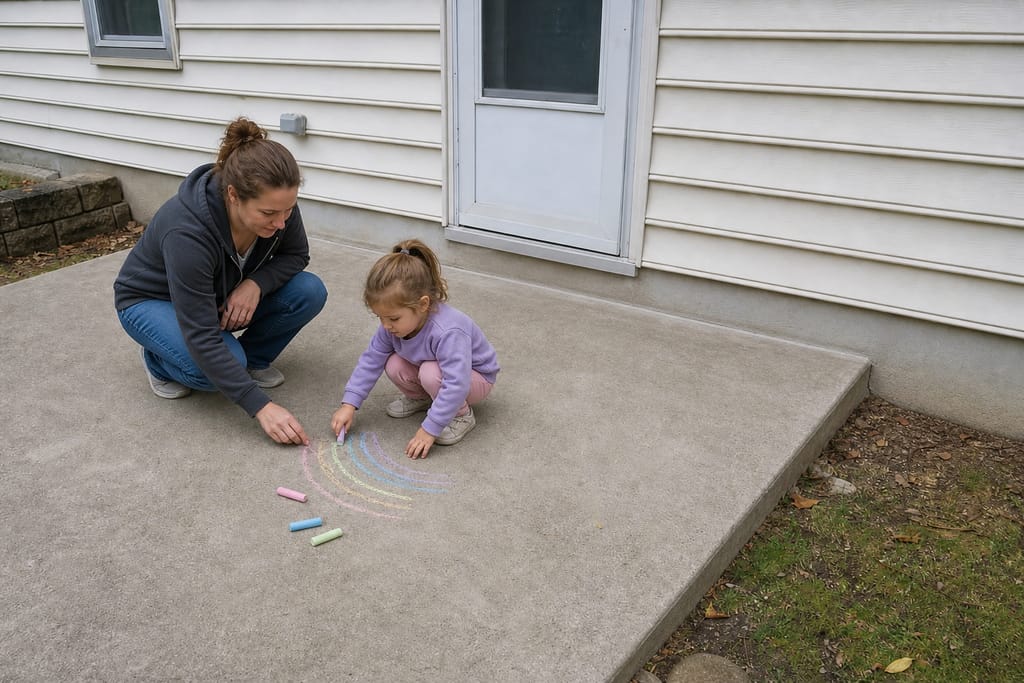
After
Next step
Get a Concrete Lifting Estimate in Draper
Call Bluffdale Foundation Pros at +1 (385) 336-5716 for a free estimate on your driveway, patio, or sidewalk. Contact us to get it scheduled.
More services
Other Foundation Repair services
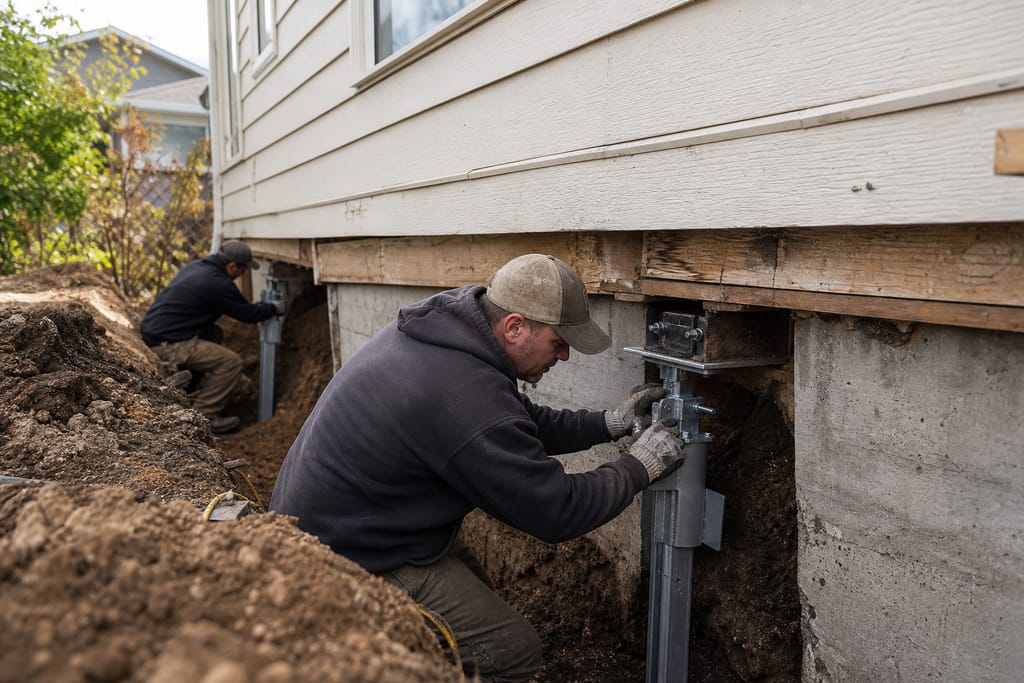
Foundation Repair
Foundation repair in Draper, UT: crack injection, piering, and wall stabilization for settling homes. Free estimates.
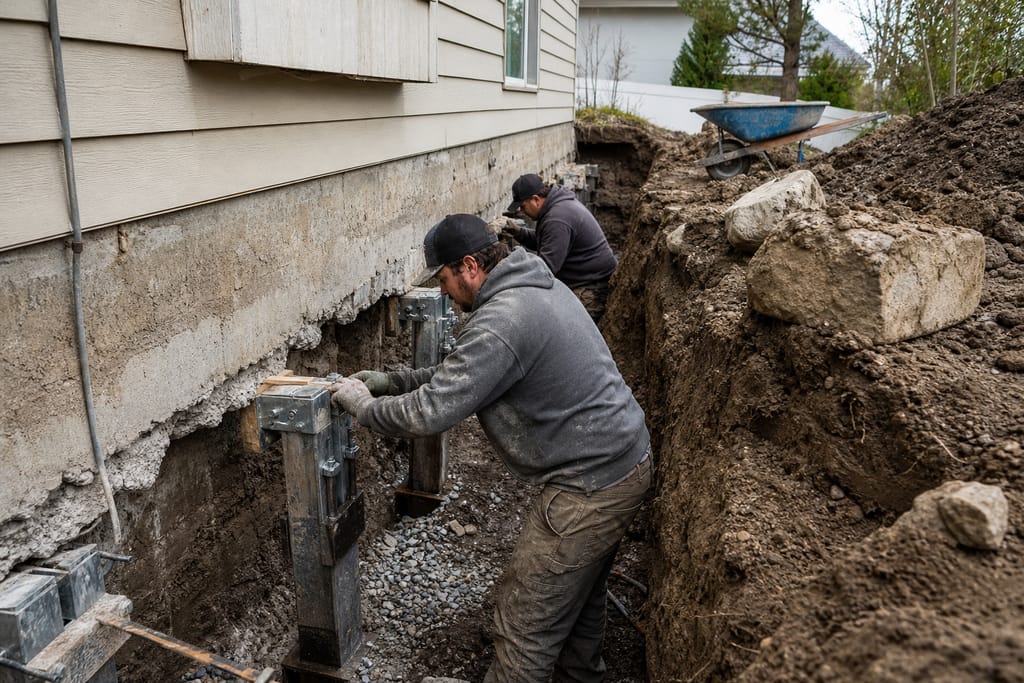
Piering and Underpinning
Push pier and helical pier underpinning in Draper, UT for settling foundations. Free estimates, written repair plans.
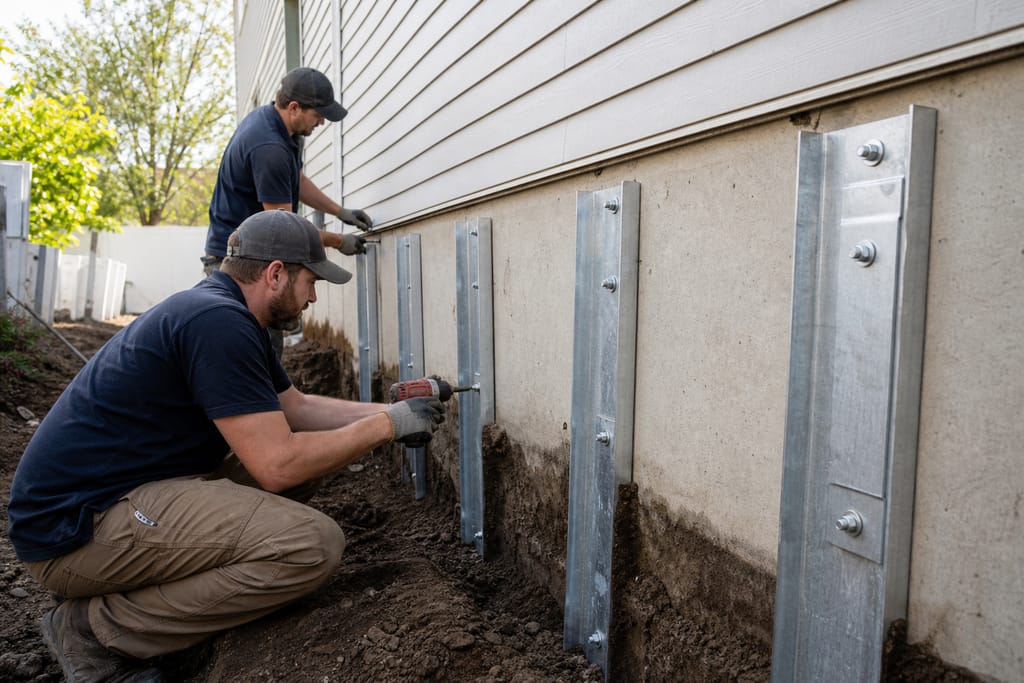
Wall Stabilization
Basement wall stabilization in Draper, UT using steel anchors and carbon fiber straps. Free estimates for bowing walls.
Ask about Concrete Lifting
Tell us about the project and how to reach you.